
 By
By In a year marked by increasing political polarization, the launch of the Congressional Jewish Caucus has become a lightning rod for debate on Capitol Hill. At the center of it all is Debbie Wasserman Schultz, the Florida congresswoman who helped spearhead the formation of the caucus. While the initiative was intended to unify efforts against antisemitism and support Jewish communities across the country, it has instead reignited divisions both within the Democratic Party and across the broader political spectrum.
Supporters of the move have praised Debbie Wasserman Schultz for taking a strong stand at a time when antisemitic incidents are on the rise nationwide. Critics, however, question the motives behind the caucus and suggest that it may contribute to greater political and cultural fragmentation. Regardless of viewpoint, one fact remains clear: Debbie Wasserman Schultz is once again at the forefront of a heated national conversation.
Debbie Wasserman Schultz Leads Formation of New Legislative Bloc
The Congressional Jewish Caucus was formally introduced in 2025, with Debbie Wasserman Schultz as one of its founding members and most vocal advocates. The caucus aims to combat antisemitism, support Holocaust education, and advocate for policies that benefit Jewish communities in the United States and abroad.
Debbie Wasserman Schultz has argued that Jewish Americans deserve formal representation within Congress, just like other identity-based caucuses such as the Congressional Black Caucus and the Congressional Hispanic Caucus. She has positioned the new group as a nonpartisan body focused on protecting civil rights, promoting religious tolerance, and standing firmly against hate-based violence.
In her public remarks, Debbie Wasserman Schultz emphasized that the caucus is meant to bring lawmakers together, regardless of party affiliation, to address shared concerns affecting Jewish Americans. She cited alarming statistics on antisemitic violence, hate speech, and misinformation as justification for forming the group.
Praise and Pushback From All Sides
While many Jewish organizations and advocacy groups welcomed the creation of the Congressional Jewish Caucus, Debbie Wasserman Schultz has also faced criticism from both progressives and conservatives. Some on the left have expressed concern that the caucus may be used to stifle criticism of Israel or to push foreign policy agendas that do not reflect the views of all Jewish Americans.
Critics have pointed to Debbie Wasserman Schultz’s strong pro-Israel stance as a potential source of bias within the caucus. They argue that Jewish identity in the United States is diverse and multifaceted, and that the caucus risks promoting a narrow political viewpoint rather than an inclusive cultural representation.
Conservative voices have questioned the need for a separate Jewish caucus altogether, suggesting that such identity-based groups contribute to political tribalism. Others have accused Debbie Wasserman Schultz of using the caucus to rebuild her public image after past controversies, including her resignation as Democratic National Committee chair in 2016.
Despite the criticism, Debbie Wasserman Schultz has stood by the decision, stating that the threats facing Jewish communities require a unified and coordinated response from Congress.
A Polarizing Figure in a Polarized Time
This is not the first time Debbie Wasserman Schultz has found herself at the center of controversy. Her political career has been shaped by high-profile moments, from internal party disputes to debates over congressional ethics and financial transparency. The formation of the Congressional Jewish Caucus has only added to the complex legacy she is building in Washington.
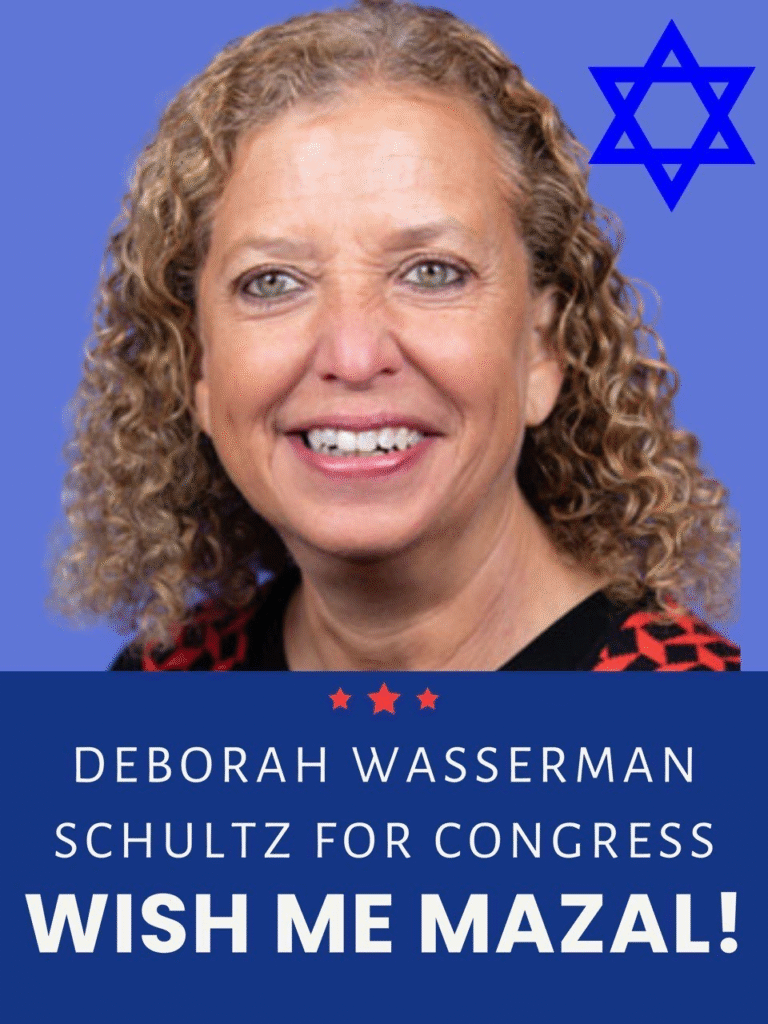
Supporters view her as a bold advocate for Jewish identity, women’s rights, and healthcare reform. Detractors see her as a political operator more concerned with control than consensus. Whatever the perspective, Debbie Wasserman Schultz continues to play a major role in shaping conversations around representation, identity, and the future of American politics.
As debates around religion, race, and culture grow louder in Congress, the leadership of Debbie Wasserman Schultz within the newly formed caucus ensures that her influence will continue to spark both praise and pushback in equal measure.