 By
By Most marketing engagements start with a channel. DooLab starts one step earlier: what is the business actually trying to win, and what has to be true across every touchpoint to get there?
“A brand needs purpose to be credible and discipline to be profitable,” Nadia Althabe says. “You can’t buy your way past that decision.”
It’s the line she comes back to most, and it explains why her engagements don’t look like what most small companies are used to buying. A campaign, a content package, a rebrand — each one purchased in the hope that it will stand in for a decision nobody has made yet.
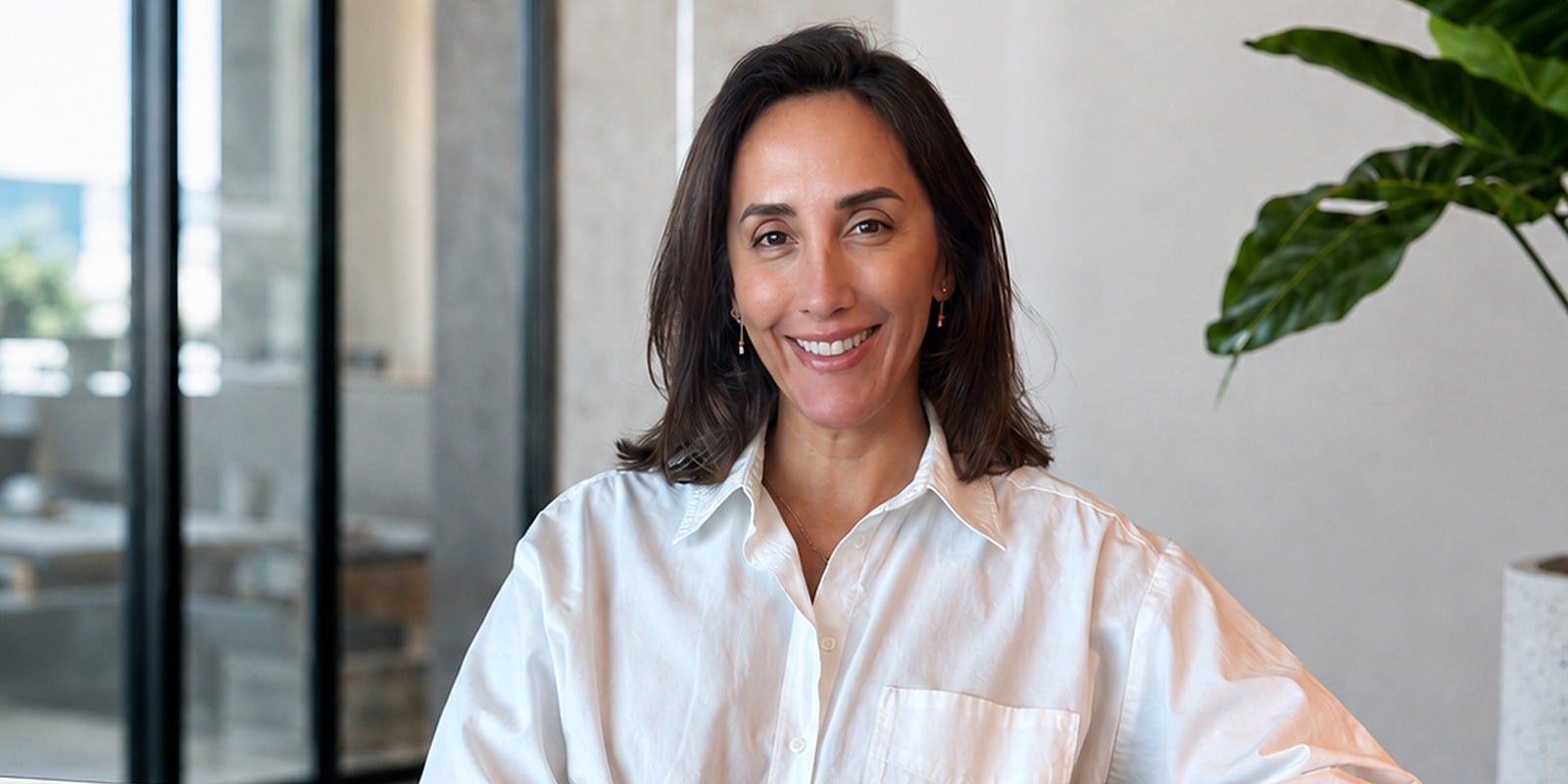
Althabe is the founder and principal strategist of DooLab, a Miami brand and business strategy practice working with companies across premium automotive, motorsport, yachting, hospitality, wellness and lifestyle. Her engagements start with positioning and run through commercial execution — and what she leaves behind is built to keep operating once she’s gone.
Her clients are founder-led companies in luxury automotive, motorsport, yachting and hospitality — Latin American businesses entering the U.S. market, and established players defending position in premium categories. Most of them she doesn’t discuss by name.
One she will. At Squadra Lupo, she works across the group’s different business verticals — spanning brand identity, commercial planning, digital and print. She has also led the launch of a number of new projects, including the one she’s proudest of: the Squadra Lupo Hub in Miami.
Fourteen years on the corporate side
Before Miami, Althabe spent fourteen years running brand and product inside Latin America’s licensee and distributor system — the companies that hold the rights to run global labels in a region.
At Distrinando S.A. in Argentina she managed marketing for the Le Coq Sportif, Wrangler Footwear and Arena licenses from 2006 to 2010, running sports sponsorships across Davis Cup tennis, the local rugby championship and the National Swimming League, and taking the Wrangler Footwear license to market. She then moved to ID Argentina S.A., the Converse licensee for Argentina, Paraguay and Uruguay, as regional product manager from 2010 to 2013, working across Argentina, Brazil and China within Converse’s global product and brand framework.
At Paez she led brand marketing and go-to-market across LATAM, the United States and Asia & Oceania, later heading LATAM product development, and ran the company’s trade show programs at Bread & Butter Berlin and Magic Las Vegas. During that period she also served as Paez’s project sponsor in Harvard Business School’s FIELD Global Immersion partner program, acting as the company’s point of contact for an on-site student consulting project on omnichannel and in-store innovation.
From 2016 to 2020 she was Global Brand Director at Queen Juana, directing global brand strategy and international expansion for the Argentine retail brand, and building its regional marketing function from the ground up — including marketing, PR, e-commerce and trade marketing teams.
One thread runs through all of it. “It’s taking something that works in one place and building the strategy to make it work somewhere else,” she says of a career that reads, on paper, like a series of departures.
Starting over without a network
None of that track record automatically transferred when she arrived in the United States. In Argentina she had fourteen years of experience and a professional network that opened doors. In Miami she had neither — no local reputation, no referrals, nobody who could vouch for her.
“From zero really does mean zero. I overcame it the slow way — by taking on work where the result would speak for itself, and then letting long client relationships do the arguing.”
Her longest-running client relationship began in 2022 and is still going. In a business where anyone can produce a deck, retention is the credential that persuades a founder to hand over their brand.
The second obstacle was harder to name. Luxury automotive, motorsport and yachting have long been male-dominated, and she entered them as a woman with an accent. She learned quickly that credibility earned in one market does not automatically follow you into another, particularly in industries where few people in the room looked or sounded like her. What changed was that she stopped treating her background as a gap to compensate for. Understanding both U.S. and Latin American business cultures is the thing clients pay her for. “Being from somewhere else stopped being a disadvantage the moment I named it as a capability.”
She is direct about what did not resolve itself. Fear and impostor syndrome, she says, did not disappear once the business worked. “I don’t think the goal is to defeat them once and for all. It’s to get good enough at recognizing the voice that it doesn’t run the decisions.”
She doesn’t sell decks
What Althabe leaves with a client is a system — how the business gets found, who it decides is worth talking to, how it follows up, how it reads its own market — built to keep running after she’s gone. “Don’t build a practice that depends on you being in the room,” she says. “It’s better work, it scales, and it’s the difference between a job and a business.”
AI is one of the materials those systems are made of, and she’s impatient with how most companies are using it. “It’s not a content machine. Used well, it’s commercial infrastructure — client acquisition, qualification, follow-up, market intelligence. The businesses that understand that distinction will out-compete much larger ones.”
She’s built it, not just argued it. For a luxury mobility company expanding into the United States from Argentina, she led the U.S. market launch — company strategy, brand creation, go-to-market, partnerships, B2B and B2C operations, including a custom AI-enabled business development system for client acquisition, qualification, follow-up and market intelligence. What that work is really about, the way she frames it, is access: capability that used to require an enterprise budget, at a scale a small company can actually reach.
What comes next
Althabe wants DooLab to become a go-to growth and commercialization practice for premium, founder-led businesses entering or expanding in the United States. In the Miami metropolitan area alone, small businesses account for more than half of employment — yet many still operate without access to the kind of sophisticated commercial infrastructure larger companies take for granted. Closing that gap is the work she wants attached to her name.
There’s another piece she’s circling but won’t yet call a plan — writing, frameworks, eventually teaching, aimed at women and immigrant founders building without a network. She’s deliberately careful about it. “I had to work most of it out alone,” she says. “I’d rather the next person didn’t have to.”
Nadia Althabe is the founder and principal strategist of DooLab, a brand and business strategy practice in Miami. She is a member of the Greater Miami Chamber of Commerce and the American Marketing Association’s South Florida chapter, and works in Spanish and English across the U.S.–Latin America corridor in both directions.
Website: doolab.us · LinkedIn: linkedin.com/in/nadiaalthabe · Instagram: @doolab.us