
Organisational life puts a number on nearly everything. Targets, deadlines, quarterly reviews and the dashboard someone checks before the Monday meeting all exist to answer one question: is this working?
Jeremy Bradley-Silverio Donato knows that world from the inside. Alongside writing fiction, he has built a career in business and organisational leadership, and writes regularly about leadership, culture and human behaviour. Fiction began as a space where he didn’t have to meet a target or deliver a business result.
That space eventually became Three Days Grace, published by Indigo River Publishing (Simon & Schuster) on 12 May 2026. Set in Paris, where the American author has lived since 2019, the novel explores family, memory and the things people struggle to say to one another.
The reasons arrive
Once a book goes on sale, the objectives turn up whether the author invited them or not. A novel needs readers, readers have to find it, and that brings in marketing, distribution and the slow job of building a body of work over time. Bradley-Silverio Donato does not treat publishing as a romantic undertaking. Authors, he says, have to understand those mechanics as well as the craft.
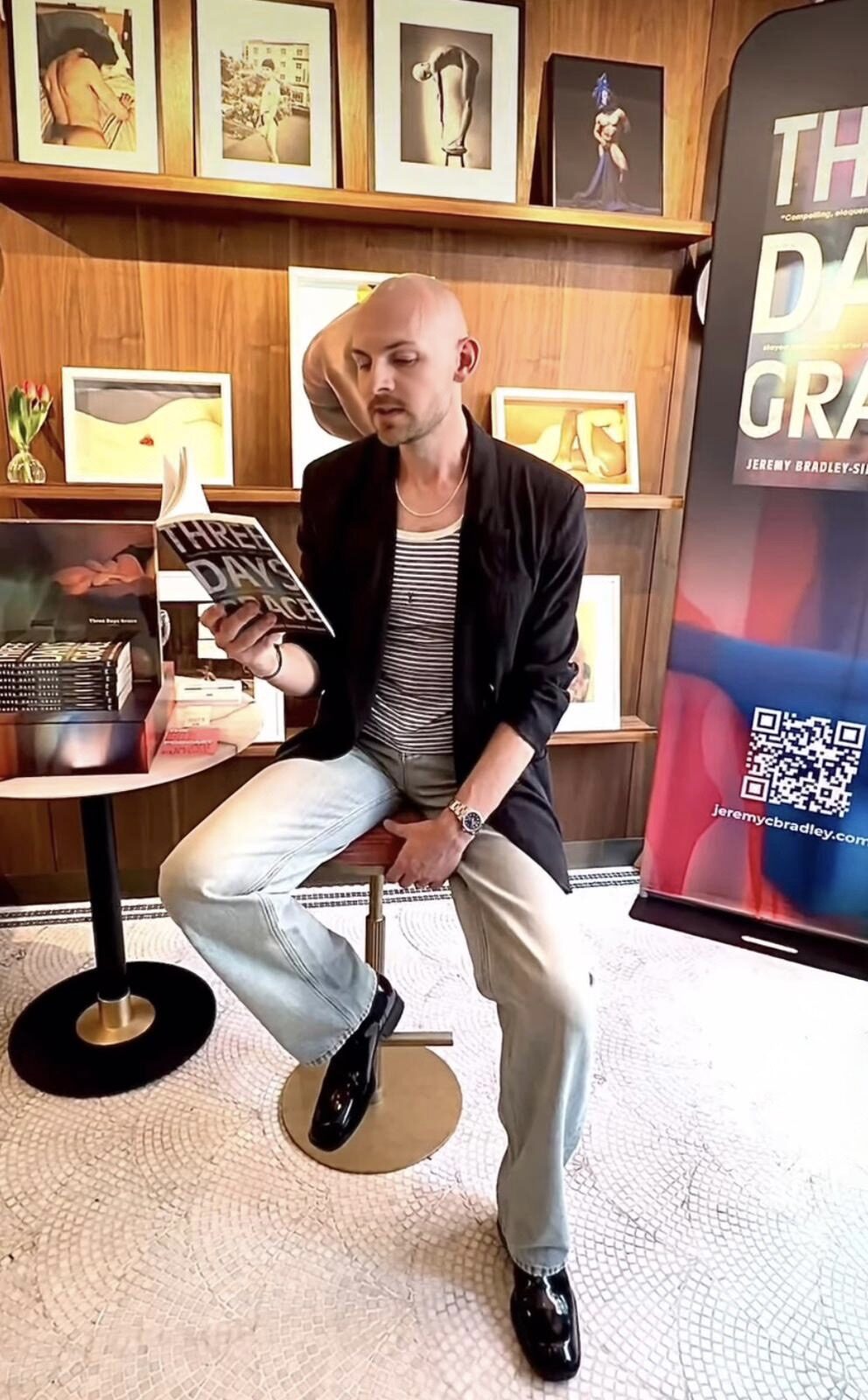
A space with no measure attached lets a writer follow material without asking what it will return. Three Days Grace takes on family secrets, guilt and forgiveness, subjects a writer has to approach at their own pace rather than a market’s.
The shift is sharper for someone with his working life. He describes his professional side as collaborative and operational, and his writing as mostly solitary, and he enjoys the contrast. In an organisation, objectives belong to a group. People share them out, argue about them and carry them together. A novelist carries them alone, and they land on the one activity that began with no audience in mind.
Anyone who has turned a private pursuit into a public one will recognise the problem. The runner who starts entering races, the cook who opens a stall, the photographer who takes a first commission: each one gains a reason to keep going and risks losing the reason they started. You can end up checking a ranking before you remember why you wrote the first page.
Holding on to the first reason
Bradley-Silverio Donato’s answer, as far as he has stated it, rests on the interest that runs under both his lives. That interest gives the work a centre that a sales figure cannot move.
“Ultimately, whether I’m writing fiction or nonfiction, I’m interested in what happens when people finally say the thing that has gone unsaid.”
The novel bears that out. Kirkus Reviews called Three Days Grace “a dark, dramatic, and thoughtful reflection on the traumatic aspects of love and family”, a description that says nothing about markets and a great deal about what the writer was after. The book’s question existed before any marketing plan, and it will still be there after the last campaign ends.
There is a case for welcoming the change. A writer who understands distribution can make sure the book reaches the people it was written for, and an operator knows how to read a set of objectives without letting them run the place.
He keeps the two sets of reasons in their places. The metrics that come with publication serve the book: they decide how many people get the chance to read it. The original reason decides what those people find when they open it. Mixing up the two is where a writer with an operator’s instincts could go wrong, by letting the dashboard start choosing the subject.
The question will come round again. His next novel is already with his publisher, and with it will come a fresh set of objectives, attached once more to the part of his life that used to have none. He seems content to let them attach, as long as they stay on the outside of the work.
Jeremy Bradley-Silverio Donato is an American novelist who lives in Paris and writes on leadership and culture. Three Days Grace is published by Indigo River Publishing and distributed by Simon & Schuster.
jeremycbradley.com · jeremycbradley.substack.com · @jeremycbradley