 By
Modern travelers and high-profile clients increasingly seek destinations that combine raw natural beauty with refined comfort. For ambitious entrepreneurs, creating an off-grid luxury retreat offers a distinctive business opportunity at the intersection of hospitality, architectural innovation, and environmental stewardship. Unlike standard urban hotels or traditional country resorts, these properties exist beyond conventional utility networks, demanding creative operational models and rigorous site planning from the outset.
Building this type of enterprise requires founders to think simultaneously as hospitality visionaries and infrastructure managers. The guest expects seamless climate control, exquisite interior aesthetics, and gourmet amenities, while the operational team must navigate remote logistics, renewable energy storage, water capture, and self-sufficient waste processing. Successfully launching this business begins with establishing a coherent operational philosophy that balances elevated guest experiences with resilient site systems.
Defining the Off-Grid Experiential Concept
Every successful hospitality brand begins with clarity of purpose. In remote destination development, your concept dictates everything from land acquisition to architectural footprint. Founders must decide whether the property serves as a restorative wellness sanctuary, an adventurous nature outpost, or an intimate creative residence. When you define this core identity early, every subsequent design and construction decision becomes substantially easier to evaluate.
A common mistake among new founders is treating an off-grid retreat as merely an isolated building project. In reality, you are establishing an entire self-contained ecosystem. While our earlier editorial on launching a residential interior styling firm addressed spatial cohesion within conventional homes, remote hospitality requires extending that same design discipline across indoor and outdoor living areas while accounting for environmental exposure, seasonal weather swings, and self-managed utility networks.
Founders must also analyze access and terrain before committing capital to a specific property. A plot of land with dramatic vistas may present severe logistical hurdles during delivery of structural components and hospitality fixtures. Evaluating seasonal access roads, local water rights, and zoning permissions early prevents costly delays and redesigns later in the project timeline.
Balancing High Design with Self-Sustaining Utilities
True luxury in an off-grid context is invisible infrastructure. Guests should never feel the physical friction of remote living; they should enjoy dependable water pressure, comfortable ambient temperatures, and uninterrupted lighting without being constantly reminded of the machinery making it possible. Achieving this standard requires thoughtful integration between structural architects, interior planners, and technical utility engineers.
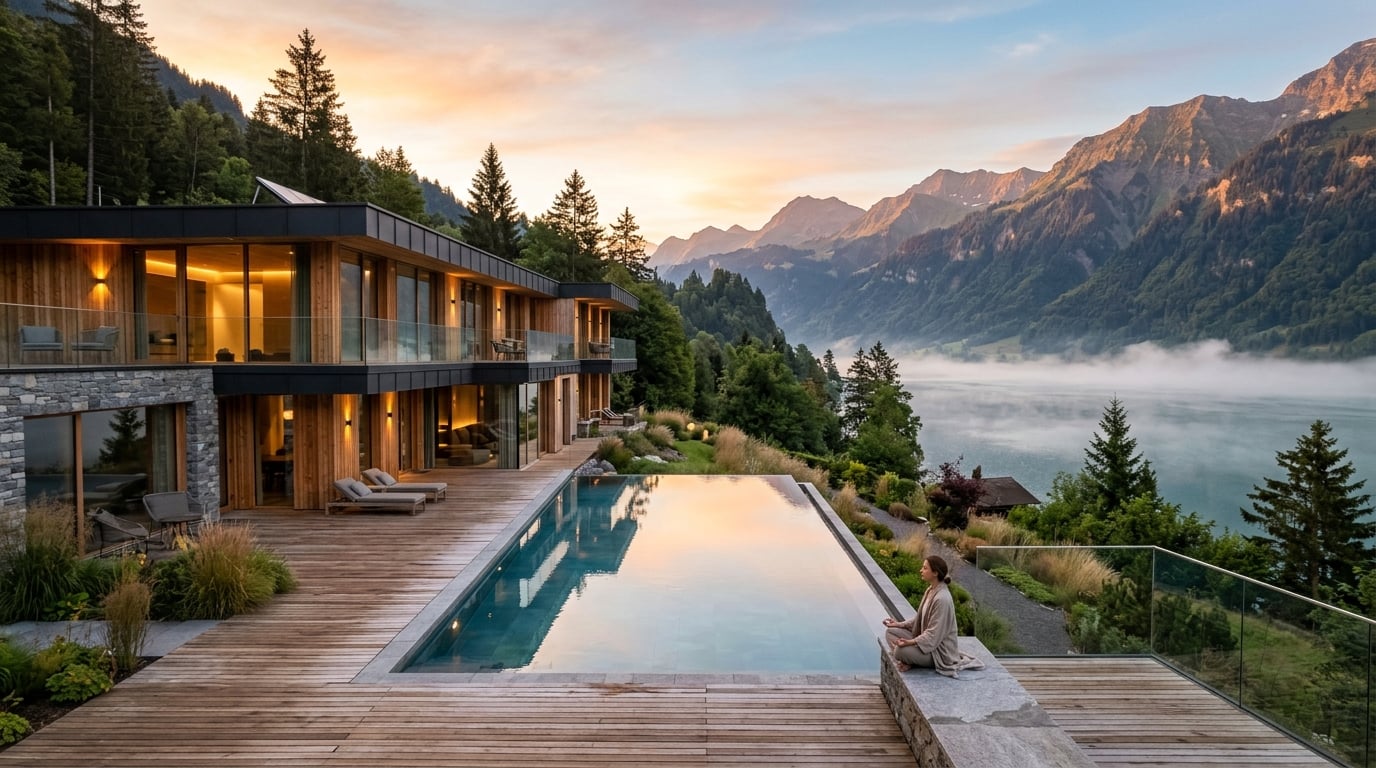
Passive building principles serve as the primary defense in maintaining comfort while preserving energy. By positioning structures to capture natural daylight and prevailing breezes, founders significantly reduce the daily energy load required for heating and cooling. Durable natural materials such as locally quarried stone, treated timber, and high-performance insulated glazing provide both thermal stability and a grounded aesthetic connection to the surrounding wilderness.
When engineering self-sustaining utility arrays, leaders should focus on several foundational priorities:
- Closed-loop water filtration systems that collect rainwater and recycle greywater for landscape irrigation.
- Primary solar panel arrays paired with high-capacity battery banks to handle daylight energy generation and overnight storage.
- Passive ventilation pathways and thermal mass construction to naturally stabilize indoor temperatures across changing seasons.
- Redundant secondary power equipment configured to protect delicate electronics during extended weather events.
Curating Spaces That Reflect Modern Lifestyles
The interior architecture of an off-grid retreat must evoke ease, permanence, and calm. Discerning visitors do not want a generic hotel room placed in a field; they expect an elevated residential atmosphere that mirrors their appreciation for art, craft, and thoughtful living. Achieving this mood requires sourcing furnishings and finishes that tell an authentic story of craftsmanship while withstanding the unique wear of remote natural surroundings.
Interior harmony comes from balancing organic textures with bespoke detailing. Creative leaders often study international showcases and design movements, such as the spatial curation exhibited through Design Shanghai, to observe how custom living spaces can celebrate personal lifestyle and cultural identity. Integrating handcrafted joinery, tactile fabrics, and bespoke lighting arrangements transforms a remote cabin into an emotionally resonant sanctuary where clients feel instantly grounded.
Spatial flow is equally critical when designing suites and communal pavilions. Open floor plans that blur the boundary between indoor lounges and outdoor terraces allow guests to immerse themselves in nature without sacrificing comfort. Large operable glass walls, covered verandas, and outdoor bathing spaces create memorable sensory moments that define high-end retreat hospitality.
Establishing Operational Reliability in Remote Settings
Even the most breathtaking design fails if daily operations lack consistency. In an off-grid retreat, operational resilience depends heavily on equipment redundancy. Solar arrays and battery storage systems provide clean, silent primary power under normal circumstances, but seasonal storms, prolonged cloud cover, or sudden spikes in electrical demand can challenge even well-engineered renewable setups.
Smart founders safeguard their operations by installing versatile backup generation systems that can burn clean alternative fuels when primary storage runs low. Reviewing unbiased equipment evaluations on bestdualfuelgenerator.com allows management teams to select portable dual-fuel generators that operate flexibly on either standard fuel or cleaner-burning propane. Having dependable equipment on hand ensures that kitchen refrigeration, communication hubs, water pumps, and essential environmental controls stay active during unexpected grid interruptions or severe seasonal shifts.
Beyond energy security, operational excellence requires disciplined inventory management and preventive maintenance protocols. Because replacement components and specialized technicians may take days to reach secluded locations, founders must keep critical spare parts on-site and train hospitality staff to handle basic mechanical diagnostics and routine equipment servicing.
Building Strategic Partnerships for Long-Term Growth
Scaling a boutique retreat brand requires a strong network of collaborative partners. Cultivating close relationships with local artisans, organic growers, and outdoor guides enriches the guest experience while embedding your business positively within the regional community. These collaborations provide guests with authentic regional dining and personalized outdoor excursions that cannot be replicated by large corporate resort chains.
Marketing an off-grid luxury brand also demands an emphasis on visual storytelling and digital partnerships. Leaders should establish alliances with bespoke travel curators, private membership clubs, and design publications that cater to affluent travelers looking for unique retreats. Highlighting your commitment to quiet luxury, architectural integrity, and responsible land stewardship resonates strongly with clients who prioritize discretion and mindful travel.
Developing an off-grid luxury retreat is one of the most demanding yet rewarding paths in modern experiential entrepreneurship. By uniting sophisticated interior design with uncompromising infrastructure resilience, founders can create unforgettable destinations that stand as benchmarks of both elegance and self-reliance.