 By
Hybrid working has changed the daily routine for many office workers. Some days begin with a train journey and end with a crowded platform, while others start at the kitchen table and stretch into a long afternoon. A reliable home desk can make those remote days productive, comfortable, and easy to switch off from. The goal is not an expensive office in a spare room, but a clear space that supports focus, posture, and a clean boundary between work and home.
Choosing the location
Look for a spot that has reasonable natural light and a door you can close. A corner of a living room can work, but it often becomes a second workplace with constant interruptions. If the only option is a shared area, set a routine that clears the desk at the end of each day, so the space returns to home use. Avoid positions where the screen faces a bright window, because glare causes eye strain. Think about the sound of the room as well, since hard floors and bare walls can echo during calls. Readers may also want to visit jobmarketeconomist.com.
Check the connection as well. Sit near the router if possible, or use a wired connection for important calls. A weak signal in the wrong corner can make video meetings frustrating for everyone, and a little planning avoids that problem.
Essential equipment and posture
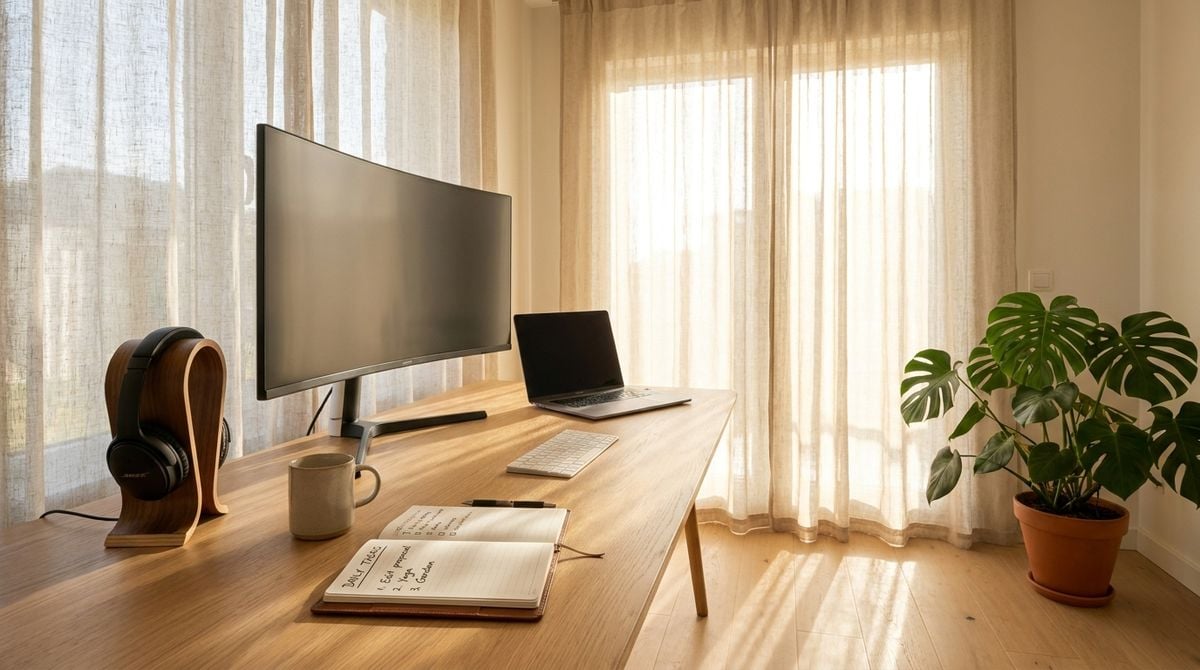
A chair and desk height matter more than decoration. Choose a chair that supports the lower back, and set the screen so the top of the display sits at or just below eye level. Keep the keyboard and mouse close enough that your elbows stay relaxed. A separate keyboard and an external screen often help when working on a laptop for long periods.
Lighting and sound are also part of the setup. A desk lamp that you can angle reduces shadows on your face during calls, and a basic headset improves clarity. If the household is noisy, a pair of headphones with good noise control can help you concentrate during busy hours.
- Set the screen top at or just below eye level.
- Keep your elbows relaxed and your wrists in a neutral position.
- Use a desk lamp to reduce shadows during video calls.
- Keep a water bottle and a notepad within easy reach.
- Store cables neatly so the desk stays safe and tidy.
Building a daily routine
A home desk works best with a routine. Start at the same time each morning, even if you are not commuting, and take a short walk before opening your laptop. End the day by closing applications, tidying papers, and writing a list for tomorrow. These small rituals signal the start and end of the working day, which is especially important when work and home share the same rooms.
Breaks matter too. Stand up at regular intervals, stretch your shoulders, and look at something distant to rest your eyes. Many people find that a short movement break keeps energy steady through the afternoon. Hydration is easy to forget at a desk, so keep water nearby and refill it at each break.
Mistakes to avoid
The first mistake is working from the sofa or the bed for long sessions. Soft furniture rarely supports good posture, and the habit can blur the line between rest and work. Reserve a proper seat for work, even if the setup is simple.
The second mistake is ignoring ergonomics because the desk is temporary. Discomfort often builds slowly, and a short-term arrangement can become a long-term problem. If you notice persistent pain, speak with a qualified health professional about your setup.
The third mistake is failing to tell your household about your schedule. Family members or flatmates need to know when you are on calls and when you are unavailable. A simple agreement about quiet hours prevents interruptions that disrupt both work and home life.
Keeping the setup sustainable
Review your desk setup every few months. Needs change as projects shift, and a small adjustment can improve comfort. Keep a record of what works, such as the chair height or the lamp position, so you can recreate the setup if you move desks. A short note of the date of each change also helps you see which adjustments made a real difference.
You can also visit newlookcompany.net for more reading. For a related read on this site, see Using a Mailing Address and Business Phone Line.
Hybrid working rewards a home desk that is simple, comfortable, and consistent. Choose a location with few interruptions, set the screen and chair correctly, build a daily routine, and agree on boundaries with the people you live with. A well-planned workspace can make the remote days feel like a genuine part of your working week.