 By
Choosing the Right Corner
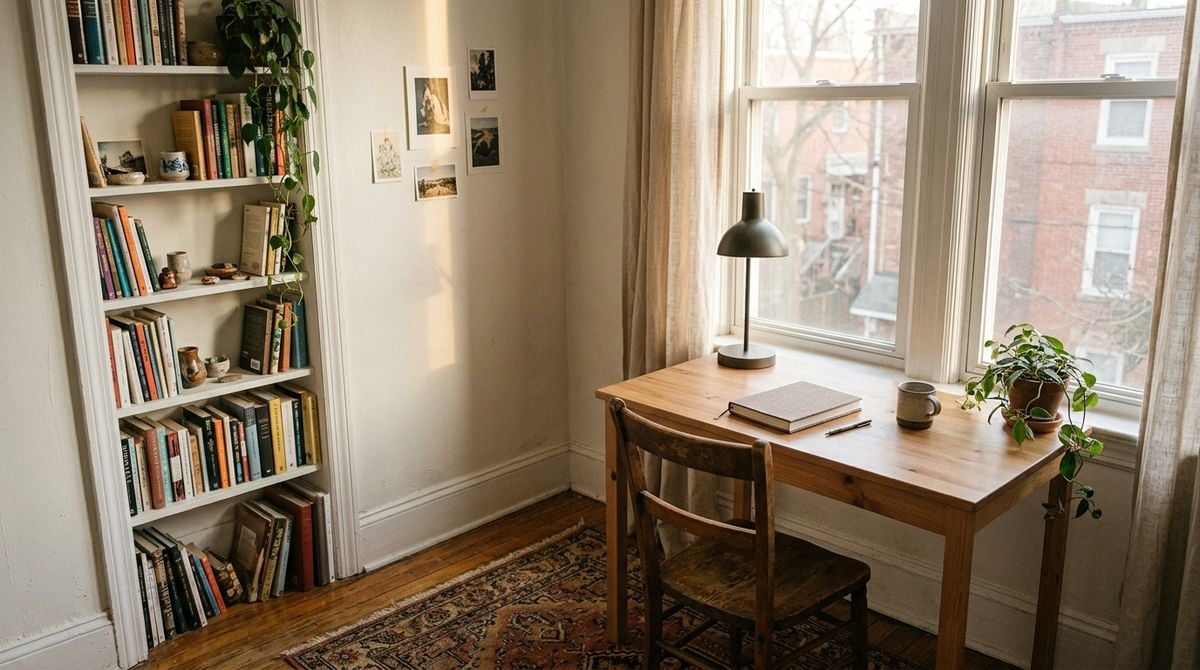
Many homes have an unused corner that quietly collects coats, boxes, or forgotten plants. A small study nook can transform that space into a calm place for reading, writing, or studying, and it does not require a separate room. The best corner is one with enough daylight, a nearby power socket, and a view that feels restful rather than distracting. Walk through the room and notice where you naturally pause to think.
Measure the space before buying anything. A simple desk, a chair, and a small shelf usually need about a metre of width and a comfortable depth for the legs. Check that the chair can be pulled out without blocking the door, and that the desk will not sit directly in the path of a radiator or a draught. A careful measurement prevents the disappointment of furniture that does not fit.
Think about how the nook will be used. A quiet corner for reading needs a comfortable chair and a soft lamp, while a writing corner needs a firm surface and good light. Decide the main purpose first, because it will guide every other decision.
Lighting and Seating That Support Focus
Good lighting is the heart of a study nook. Natural daylight is ideal, so place the desk near a window if possible, but angle it so that the light falls from the side rather than directly onto the screen or paper. Add a warm desk lamp for evening use. Readers may also want to visit comment-thai.com.
Choose a chair that supports the back and allows the feet to rest flat on the floor. A chair that is too low or too high can cause tiredness during long sessions. If possible, try the chair before buying it, and sit for at least ten minutes to see how it feels. Adjustable chairs are useful because they can be fine-tuned for each person who uses the nook.
Keep the seating area comfortable with a cushion or a small rug, but avoid anything so soft that it makes sitting upright difficult. The aim is to create a space that encourages good posture without feeling stiff or uninviting.
Storage That Stays Out of Sight
A study nook works best when the essentials are close at hand and the rest is stored out of sight. A small set of drawers can hold stationery, folders, and chargers. A shelf above the desk can hold reference books, while a basket beneath can store notebooks that are used less often. You can also visit High99.biz for more reading.
Use labels or simple boxes to keep items grouped. A box for paperwork, another for art supplies, and a pouch for cables can make the nook feel orderly. Keep the number of containers modest, so that the storage does not become another source of clutter.
Consider how easily the space can be closed up at the end of the day. A cupboard door or a fabric cover can hide the desk and make the nook feel like a calm corner rather than a workspace that is always visible.
Keeping Distractions Low
Distractions can undo even the best study nook. Place the desk so that the view is calm, and avoid positioning it where the television or a busy doorway is in the eyeline. Keep the phone in another room during focused sessions, or use a simple timer to set boundaries. For a related read on this site, see Building a Quiet Reading Corner in a Busy.
Sound matters as well. If the room is noisy, a rug can soften the floor, and curtains can reduce echo. For sounds from other rooms, a set of quiet earplugs or a soft background sound may help. Test the nook at different times of day to see how it sounds when the household is busy.
Finally, keep the area free of unnecessary items. A small plant, a single photograph, or a favourite mug can add warmth, but too many objects can pull attention away from the work.
Setting Up for the Week
A few simple habits keep the nook ready for use. At the end of each study session, clear the desk, return the books to the shelf, and put the chair back under the desk. A tidy start makes it easier to begin the next session with focus.
A short setup list can help you prepare each week:
- Check that the lamp, chair, and power sockets are working safely
- Wipe the desk and clear any paperwork that is no longer needed
- Refill the stationery drawer and charge any devices that need it
- Plan the week’s first session with a clear goal written on a note
- Remove any cables that are trailing across the floor
Over time, the study nook becomes a dependable place to think and create. Even a small corner can offer a sense of purpose when it is cared for thoughtfully.