 By
By Florida law presumes that every real estate licensee in the state is a transaction broker unless somebody puts something else in writing. A transaction broker deals honestly, accounts for money held, discloses known material defects and presents offers on time. What a transaction broker does not owe is loyalty, and the confidentiality is limited by statute: it does not cover how much a buyer will actually pay, what is motivating them, or the terms of their financing. Loyalty, full confidentiality and obedience belong to a single agent, who has to be designated in writing before the fact.
The staff in a developer’s sales gallery are not neutral either. They are the developer’s people and their duties run to the developer. A buyer walking into a pre-construction tower in Miami or Palm Beach County without a relationship is working a market whose default settings supply no advocate.
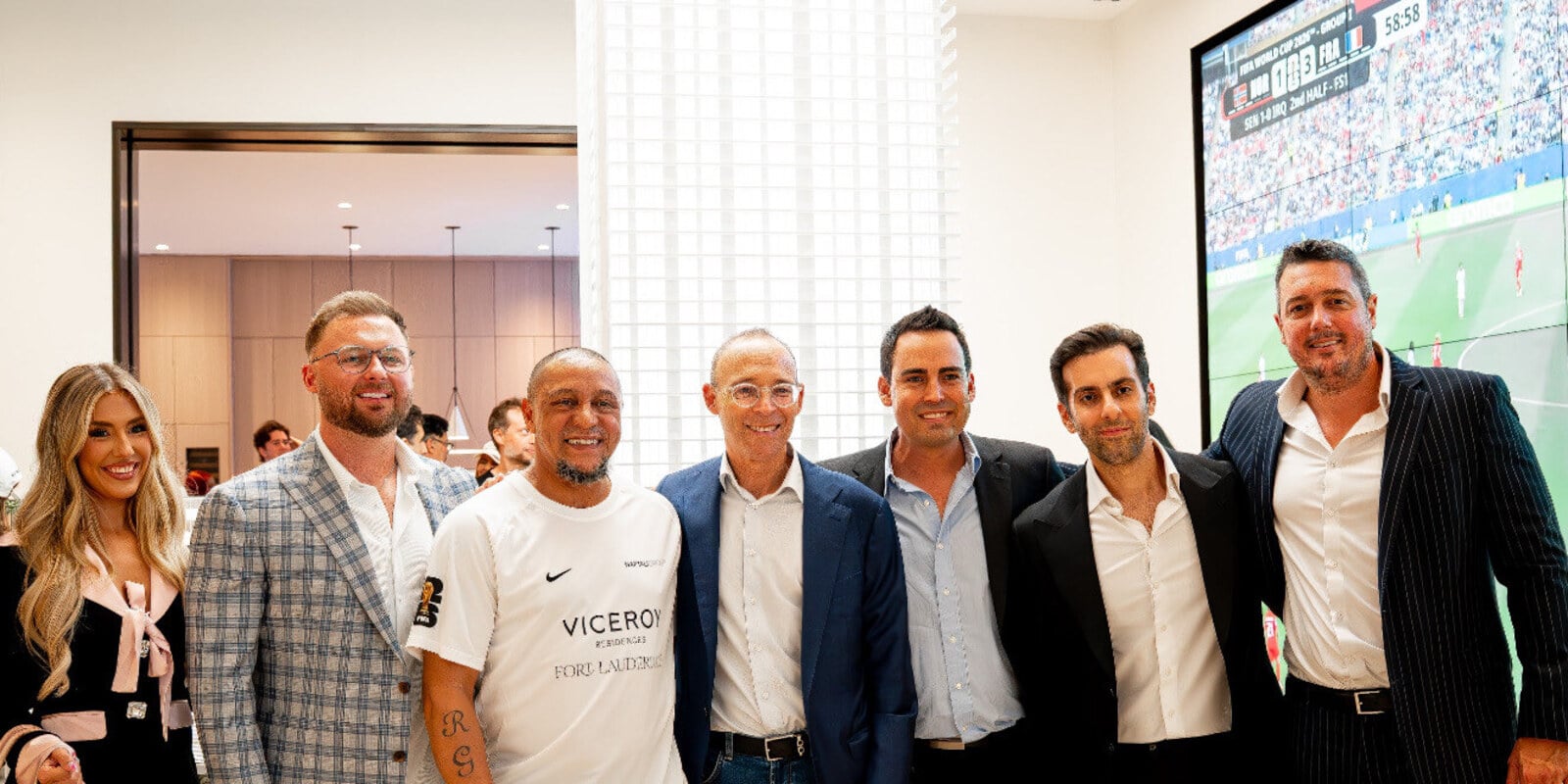
Eric McNeil’s work sits in that gap. He has invested in several pre-construction developments in South Florida, works alongside the developers building them, and connects athletes and entertainers with select projects between Miami and Palm Beach. McNeilX is the broader platform through which McNeil is building relationships and business opportunities across real estate, private investments, sports and entertainment. What a counterparty on his side of the table actually receives is duller and more useful than the word relationship implies.
Sight of a release before it is a release
Developers do not put a whole building on sale at once. They release inventory in phases and raise prices as absorption builds, so the first phase is priced below where the sponsor intends to finish. Strong developer relationships can create earlier visibility into upcoming inventory and new releases, allowing opportunities to be evaluated while a broader range of residences may still be available. The advantage is often one of timing and access rather than price.
A held unit while the money is arranged
The mechanism here is the reservation agreement, and Florida law makes it cheap for the buyer and expensive for the developer. Reservation deposits go into escrow and must be refunded in full and without qualification whenever the prospective buyer asks in writing. So a reservation costs a buyer nothing but time. It costs the developer a unit off the board and a hole in the absorption count for as long as it runs.
Developers therefore ration them. A sponsor will hold a residence for weeks for someone whose money has arrived on schedule before, and for days, if at all, for a name nobody in the office recognises. The difference is a judgment about whether the unit comes back to the board.
The buyers McNeil works with often need the longer version. An athlete’s income arrives in instalments across a season and the timing of a bonus or a reconciliation is not theirs to move, so a residence that must be committed to inside seventy-two hours is one they cannot buy, however well it suits them.

Staying close to a development as it progresses
Delivery quarters move. A permit revision, a subcontractor failure, a materials delay or a bad storm season pushes a completion date, and a developer will hold that news as long as they can, because announcing it raises the same question from every buyer at once. There is a legal edge to the reticence as well. If the change materially alters what the developer disclosed in the condominium documents, and does so adversely, Florida law can hand purchasers a fresh fifteen-day right to cancel.
For McNeil, maintaining direct relationships with developers throughout the life of a project creates a clearer understanding of how a development is progressing and allows him to stay close to changes as they arise. For buyers whose schedules may depend on delivery timing, that ongoing communication can be particularly valuable.
What travels back the other way
The reason developers keep taking the call is that the exchange runs in both directions. Sponsors ask what the buyer population is resisting and why, which floors are sticking, whether finishes specified two years ago still read as current, and what the competing tower three blocks north is doing on its deposit schedule.
The last of those is live at the moment. Through 2025, analysts tracking the Greater Downtown Miami pipeline reported developers cutting the deposit a buyer has to commit before closing from around half the purchase price to roughly thirty percent, and raising the commission paid on a sale, as presales slowed and condominium listings across South Florida reached their highest level since 2016. A sponsor learns that a rival has moved from the people who talk to buyers, weeks before any of it reaches a market report.
None of that touches price. A developer’s pricing follows the release schedule and the lender’s underwriting, and it applies to whoever signs. What changes with a relationship is timing, information and flexibility on process, which is a narrower list than the industry’s rhetoric suggests and considerably more valuable than the rhetoric admits.
Why the network runs outside property
McNeil’s relationships extend across capital, real estate, sport and entertainment, and the spread is deliberate. A network confined to property people produces property information, which everyone in property already has by the time it arrives.
The cross-industry version behaves differently. Relationships across sports, entertainment and private capital create perspectives and connections that extend beyond traditional real estate circles. Those networks can surface changing lifestyle needs, new business activity and potential partnerships that help inform how McNeil evaluates opportunities across South Florida. None of that is real estate information and all of it changes what a real estate decision looks like.
It also gives him something to offer people who will never buy in the corridor, which is how a network stays wider than a client list.
Refusal is most of the maintenance
The part people underestimate is saying no. If the value McNeil carries with a developer is that his buyers close, then bringing one who does not costs more than the transaction pays. If the value he carries with an athlete is that he only forwards projects worth the attention, then forwarding everything destroys the reason they answer at all. The filter has to run in both directions or it stops being a filter.
Projects get declined for reasons unconnected to their quality: nothing wrong with the building, nobody in the network it suits. Introductions wait until the person receiving them can act. Being available to introduce and introducing constantly are different jobs, and the second consumes the first.
The same discipline covers the empty stretches. A developer eighteen months out from a sales launch has nothing to sell and nothing to ask for, and the natural move is to let the relationship go quiet. Contact that survives that period is the only reason the line is open on the day it matters.
What the method costs
There is an argument against working this way and it deserves stating. A business built on relationships does not scale the way a listings business scales. It is bounded by the number of people one person can genuinely know, handing it to a team turns it into something else, and it is slow to assemble and quick to damage.
The corridor makes that risk concrete. Miami through Boca Raton to Palm Beach holds a limited number of serious luxury sponsors, and word about a bad introduction crosses that distance inside a week. Working the same ground for years means every past transaction is available to anyone weighing the next one, which cuts favourably right up until it does not.
The trade is lower volume and tighter geography in exchange for arriving at a project before the sales gallery opens, and McNeil has organised his working life in South Florida around taking it.
This article is for informational purposes only. It is not an offer to sell or a solicitation of an offer to buy any security, and it is not investment, financial, legal or tax advice. Real estate and private market investments carry risk, including loss of principal, and nothing described here is a prediction of future results. Readers should consult their own licensed advisers before making any financial decision.