
 By
By Brickell office vacancy stood at 6.8% in June 2026 against a US national average of 17.7%, according to MIAMI REALTORS citing Yardi Matrix. Almost nothing is empty. The district that produces that number is roughly a mile and a half across, bounded by the river to the north and Rickenbacker Causeway to the south, and a person can cross it on foot in twenty-five minutes.
Widen the frame a little and the arithmetic gets stranger. Inside about twelve square miles of Miami-Dade sit the trading floors of the funds that moved south, the arena the Heat play in, the convention centre that hosts Art Basel every December, the causeway houses that trade at prices which make national news, and the offices of the firms that put money into all of it. Cities usually keep their industries at arm’s length from one another. Miami has stacked four of them on the same few blocks.
Tommy Shields, Head of Investor Relations at Onyx Reserve, which works in South Florida luxury real estate under the name Onyx Reserve Signature Estates, works inside that compression. The interesting thing about his position is less a career path than a location. Proximity of that intensity changes the shape of a professional life, and it does so whether or not anyone plans for it.
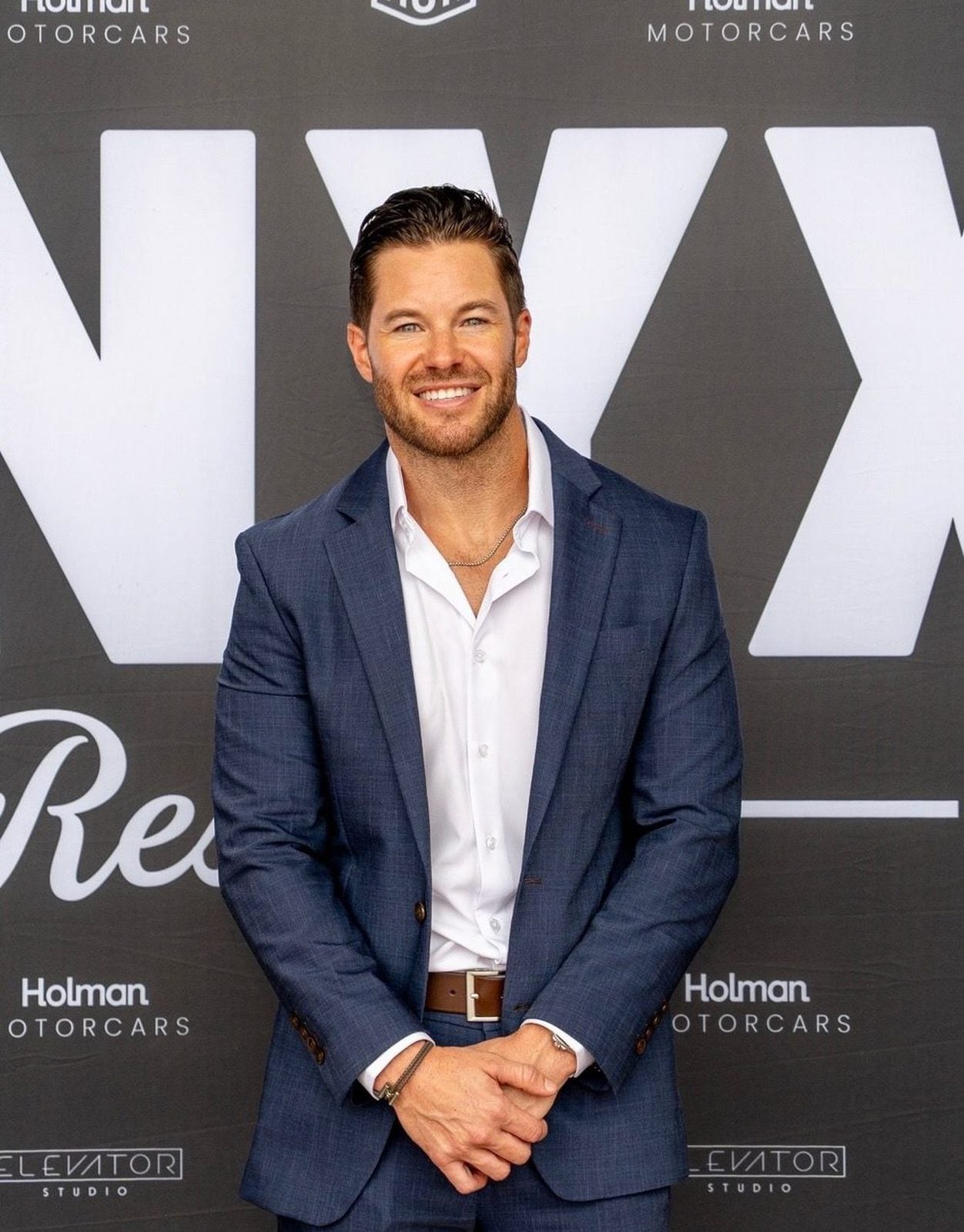
“Nobody in this region decides to build a network across four industries,” Shields said. “The geography decides it for you. You take a meeting about a building, and the person on the other side of the table made their money in something you have never worked on, and eighteen months later that is the relationship that matters.”
A conventional profile would trace the route that brought him here, employer by employer, year by year. What can be described with confidence is the environment, and the environment is unusual enough to carry the story.
Consider the density. The firms that came south did not spread evenly across the county. They clustered where the tenants who could already pay were clustered, and the near absence of empty space in Brickell is the residue of that choice rather than the cause of it.
Scarcity of that kind works as a filter. It sorts for occupiers whose economics can absorb the cost of standing on those particular blocks, which in practice means finance, law, family capital, and the professional services that follow all of them. The filter is why the same faces recur.
The geography does the introducing
Sport occupies the same map. Miami-Dade County and the Miami Heat granted arena naming rights to Kaseya for $117m over 17 years, the county announced on 4 April 2023, which put a Miami software company’s name on the building where the region’s deal-making dinners happen four nights a week in season. Neither the arena deal nor the buildings around it is a sports project or a property project in the way a directory would file it.
A county arena carrying a software company’s name, financed on a fixed schedule of payments, sits inside the same commuting radius as the towers that house the people underwriting it. The categories that organise a business card do not organise the work.
Entertainment behaves the same way. Art Basel Miami Beach drew over 80,000 visitors and 283 galleries from 43 countries in December 2025, with representatives from more than 240 museums and foundations attending, per the fair’s own figures. The Miami Open drew a record 405,448 attendees in 2025, up from 395,683 the year before, with hospitality revenue up 10% and sponsorship up 12%, Ministry of Sport reported on 31 March 2025. Neither event is a real estate event or a finance event. Both are attended, heavily, by people who do real estate and finance.

The calendar matters more than it sounds. Events of that scale set a rhythm in which the same several hundred people are repeatedly in the same building for reasons unrelated to their day jobs, which is a poor way to run a market and an efficient way to build familiarity. Somebody who has stood next to a person at four December fairs has a different starting position from somebody arriving with a deck.
Where Shields learned to move between those rooms is not documented. The pattern he describes, though, is one that anyone working the region would recognise.
“The best conversations happen sideways,” he said. “Someone brings you in on a room you have no obvious business being in, and the reason you get invited back is not what you know about their sector. It is that you were straightforward with them about something small.”
Retired professional athletes have become a visible category of South Florida principal, which gives the crossover a concrete form. The Real Deal reported on 30 November 2024 that Manu Ginóbili and a group of retired Argentine athletes including Juan Sebastián Verón are behind a $337m mixed-use project in Homestead with a 10,000-seat soccer stadium, a 38,000 square foot basketball facility, 200-bed student housing and a 150-room hotel. Former MLB player Mo Vaughn, with Hyperion Group, is developing a 147-unit apartment building with ground-floor retail in Little Haiti, the same report noted.
Those are development projects that happen to have athletes as principals, which is a different thing from athlete endorsement and requires a different set of relationships to execute.
What the boom numbers leave out
The density story has a complication, and it is a real one rather than a decorative caveat.
Business Insider, reading regulatory filings across eight large multistrategy hedge funds including Millennium, Citadel, Point72 and Balyasny, found that Miami investment-professional headcount fell from 218 in 2025 to 198 in 2026, even as the same firms grew investing headcount more than 11% company-wide. Millennium alone went from 53 investors across two Miami offices to 45 in a single Brickell location. Bradley Saacks reported the finding on 10 April 2026.
For a while that could be read as a handful of firms rebalancing inside a sector still filling up around them. The payroll data says otherwise. Financial activities employment across the Miami, Fort Lauderdale and West Palm Beach metro was 215,600 in July 2026 against 221,000 in July 2025, a fall of 5,400 jobs or 2.4%, on the US Bureau of Labor Statistics State and Metro Area Employment series updated on 21 August 2026.
The two findings point the same way. The funds trimming Miami desks are not an anomaly inside a growing sector. They sit inside a shrinking one, and the sector is shrinking by thousands of jobs while the funds shed dozens.
So the towers fill and the rents climb while the industry that fills them employs fewer people than it did a year ago. Both things are true at once, and they are less contradictory than they look. What the region attracted was disproportionately senior and disproportionately small in number, principals and their immediate teams rather than large operating populations, and an arrival of that kind takes square footage without taking headcount. A market with roughly 200 relevant investment professionals is a market where people know each other by name, and a market losing payroll around them is one where that acquaintance gets harder to replace.
That is the honest version of the network story, and it is a sharper claim than the boom version, not a weaker one. South Florida does not generate endless new counterparties. The pool is small and it got smaller over the past year, and the people in it move between industries far more readily than their titles suggest.
Shields frames the shift as novelty wearing off, which he treats as a good outcome rather than a disappointing one.
“For a while the money here was the story,” he said. “It was new, so people talked about it. Now it is just where a lot of people live and work, and the conversations have gotten quieter and longer. Quieter and longer is how you can tell a place has stopped performing for an audience.”
Whether the concentration holds is genuinely open. Brickell’s near-full buildings and a metro finance payroll in retreat describe two different futures, and one of those readings will look wrong in five years. What is not open is the near-term structure: a small number of people, in a small number of blocks, whose working lives cut across sectors that in most cities would never touch.